The best way to learn how to pack for a move in 3 days is to follow a clear room-by-room plan. Start with items you use least, pack one space at a time, label each box, and keep daily needs apart. This plan helps homeowners, renters, and office teams in Enid avoid stress and damage.
Table of Contents
- Can you pack for a move in 3 days?
- What should you pack on the first day?
- How should you organize the second day of packing?
- What should you pack on the final day?
- How do you pack efficiently when time is limited?
- How should moving boxes be labeled and loaded?
- What should you do after packing the house?
- Frequently Asked Questions
Can you pack for a move in 3 days?
Yes, you can pack for a move in three days if you make quick choices and follow the right order. The goal is not perfect packing. The goal is to protect your belongings, keep key items easy to find, and prepare every room for safe loading.
What to do before packing begins
Before you open a box, check the move date, entry points, and loading plan. Find out if the new home has stairs, narrow halls, elevators, or parking limits. These details may change how you prepare furniture and heavy boxes.
Walk through the whole home with everyone who is helping. Remove trash, donations, broken items, and things that will not move. Fewer belongings mean fewer boxes, less lifting, and a faster final check.
A simple three-day plan can guide the work:
- Day one: Sort rooms and pack items that are rarely used.
- Day two: Pack most bedrooms, living spaces, storage areas, and fragile goods.
- Day three: Pack daily items, prepare furniture, and check every room.
Which supplies make a three-day move easier
Strong boxes, packing paper, tape, markers, zip bags, and protective wrap are useful supplies. Small boxes are best for books and canned food. Medium boxes suit clothes and kitchen goods. Large boxes should hold light items, such as pillows and blankets.
You may find boxes at local stores, community groups, or a box rental service. Used boxes are fine when they are clean, dry, and firm. A moving company can also help you choose boxes for fragile items, clothing, or office gear.
Enid Movers can help Enid homeowners choose a packing plan that fits the home, schedule, and belongings. This kind of plan also helps renters and small offices avoid a rushed load.
What should you pack on the first day?
The first day should focus on sorting, clearing space, and packing items you will not need soon. Seasonal clothes, decorations, books, spare linens, guest-room goods, and stored items are good first choices. Keep daily items out until the final day.
How to sort rooms and set packing priorities
Start with one room instead of opening boxes all over the home. Place items into four groups: move, donate, dispose, and decide later. Keep the decide-later group small. Too many choices can slow the whole move.
Pack the least-used room first. A guest room, attic, basement, garage, or storage closet may work well. When that space is clear, it can hold sealed boxes without blocking busy areas.
Give each box one clear purpose. Mixing unrelated items may seem fast, but it makes unpacking harder. A box with books and kitchen tools creates extra work at the new home.
Which items can be packed immediately
The first day is a good time to pack wall art, decorations, extra lamps, spare towels, holiday items, and rarely used appliances. Put books in small boxes so they remain safe to lift. Clothes can go in suitcases, dresser drawers, or wardrobe boxes.
Keep important papers out of general boxes. Passports, birth records, leases, medicine, keys, and financial papers should stay with the person who needs them. A small personal bag is safer than a labeled box on the moving truck.
Office teams should protect records, computers, and access cards early. Each worker can keep a small work kit nearby if the business must stay open during the move.
How should you organize the second day of packing?
The second day should cover most of the home while leaving time for careful wrapping. Pack bedrooms, living areas, storage spaces, and most kitchen goods. Strong helpers should handle heavy or awkward items while another person labels the boxes.
How to pack bedrooms, living areas, and storage spaces
In bedrooms, pack extra clothes first and leave a small set for the final night. Keep shoes together and place jewelry in a personal bag. Bedding can stay out until the last morning unless the room will not be used.
In living areas, wrap pictures, lamps, electronics, and small decorations. Remove batteries from devices when needed. Put cords in labeled bags and keep each cord with its matching item.
Storage spaces need care because they often hold mixed goods. Sort before packing. Do not place sharp tools, cleaning liquids, or loose hardware with soft items.
How to handle fragile and awkward items
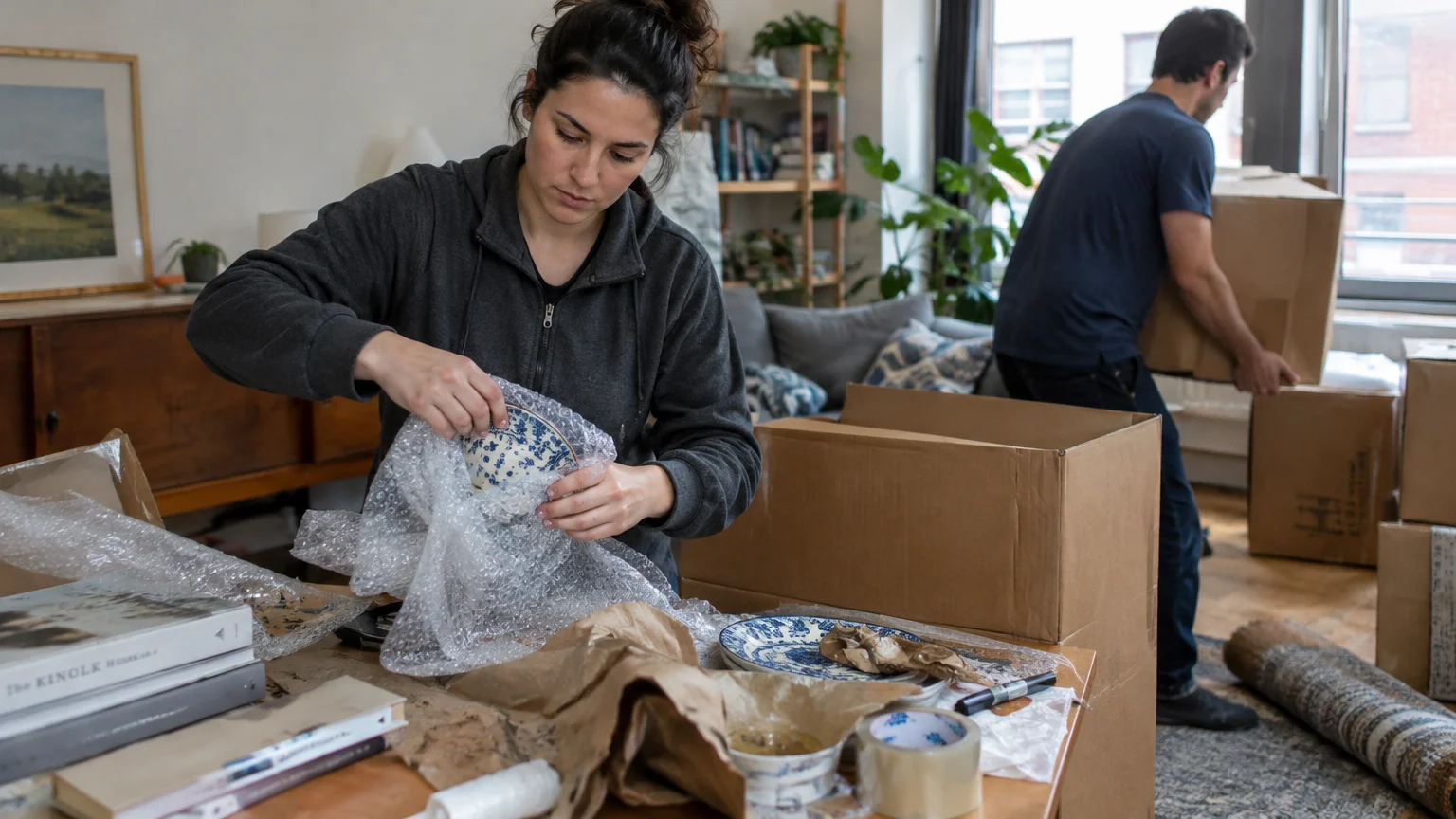
Fragile items need a firm box, soft padding, and little empty space. Wrap dishes one at a time. Place them on their edges instead of stacking them flat. Fill gaps with clean paper, towels, or clothing.
Wrap bowls on their own and nest them with padding between each piece. Place plates upright in a strong box. Wrap glasses one at a time and keep them away from the box walls.
Large mirrors, plants, televisions, and musical instruments may need special planning. A piano needs trained handling because its size, weight, and shape can cause injury or property damage. You do not need a professional for normal packing, but specialty items are a good reason to ask experienced movers for help.
What should you pack on the final day?
The final day should cover daily items, last-use kitchen goods, bedding, toiletries, cleaning tools, and open storage. Use a short list instead of memory. This lowers the chance of leaving something behind.
Which essentials must remain accessible
Each person should have a small essentials bag. It may include clothes, medicine, chargers, toiletries, snacks, water, keys, papers, and basic tools. Children may need comfort items. Pets need food, bowls, records, and safe travel supplies.
A separate first-night box should hold toilet paper, hand soap, towels, paper plates, cups, simple food, trash bags, and basic cleaning items. Mark it clearly. Load it last or keep it in a personal vehicle.
Keep valuables and important records with their owner. Do not bury them under furniture or mix them with boxes headed for storage.
How to prepare furniture, appliances, and last-use items
Empty drawers before moving dressers and cabinets. Remove shelves when they can come loose. Use tape that will not harm the finish. Protect corners and glass with proper padding.
Appliances may need cleaning, drying, and disconnection before transport. Prepare refrigerators, washers, and dryers according to their manuals. Do not disconnect gas lines or handle risky electrical work without qualified help.
Pack the last kitchen items after the final meal. Put cleaning supplies in a separate, upright container. Never pack chemicals with clothes, food, electronics, or fragile goods.
How do you pack efficiently when time is limited?
The fastest safe method is to reduce choices, use one room at a time, and keep one steady packing station. You can pack efficiently without a professional when the work involves sorting, wrapping, labeling, and simple lifting. Professional help is useful when the home is large, the deadline is short, or items are heavy and fragile.
How to use a room-by-room packing system
Choose one room, finish it, and mark it complete. Put sealed and labeled boxes near the exit only when they are ready. Keep walkways clear so nobody trips over boxes or supplies.
Use a simple label with the room, main contents, and handling note. For example, write “Kitchen — bowls — fragile.” Numbering boxes can also help you check that everything arrived.
Do not overfill boxes. Each box should close well and remain safe to lift. Put heavy goods in small boxes. Use large boxes for soft and light goods.
What to skip, donate, or dispose of before moving
A rushed move is a good time to remove things that no longer help you. Broken furniture, expired products, duplicate tools, worn clothes, and unwanted decorations may not deserve space on the truck.
Some items need special disposal. Paint, fuel, batteries, cleaning chemicals, and other hazardous goods should not go into normal moving boxes. Disposal rules vary, so check the guidance for Enid or the local county before moving these items.
Moving containers can help when loading or delivery needs more time. Before placing one, make sure the property allows it and that there is a safe, level spot. The container must not block emergency access, sidewalks, or needed driveways.
How should moving boxes be labeled and loaded?
Every box should show its destination room, general contents, and handling needs. Clear labels help movers place boxes correctly and help you find key items sooner. Labels also reduce extra carrying after arrival.
What information belongs on every box
Write the room on the top and at least one side. Add a short contents note, such as “bathroom towels” or “office cables.” Mark fragile items clearly, but remember that labels do not replace safe packing.
A numbered list can help with a large move. Note special items, personal bags, and boxes that need quick access. Keep a copy with the move papers instead of inside a truck-bound box.
How to separate essentials, fragile items, and heavy belongings
Heavy boxes should sit low and near the center of the load. Light boxes can go above them. Fragile boxes should not be crushed between furniture or heavy containers.
Essentials should be last in and first out. Personal bags and the first-night box may stay with you instead of going on the truck. Plants, pets, valuables, and papers may also need separate travel plans.
Professional movers can help protect furniture, plan the load, and manage stairs or tight spaces. Enid Movers serves Enid and can discuss packing services, local moves, residential moves, or longer-distance transport based on your needs.
What should you do after packing the house?
After the last box is sealed, pause for a final check. Walk through every room, closet, cabinet, attic, garage, and outdoor storage area. Look behind doors and under sinks. Make sure keys, papers, chargers, and medicine are accounted for.
How to complete a final walk-through
Check that appliances are empty, windows are closed, lights are off, and water fixtures are secure. Take photos of the old home after it is clear. Renters should also follow move-out instructions and return keys as required.
At the new home, place labeled boxes in their matching rooms. Keep walkways open and do not unpack every box at once. Start with bedding, bathroom items, basic food, and tools.
When professional movers can help with packing and transport
You may handle simple packing alone, but professional movers can reduce strain and protect your schedule. They can help with full-home packing, fragile goods, furniture protection, loading, transport, and difficult entry points.
Moving companies may help with a large home, an office, a short deadline, or a household with limited lifting ability. Enid Movers can help Enid residents plan the next step and keep the move in order.
Frequently Asked Questions
How can someone pack dishes for moving?
Wrap each dish separately with clean packing paper. Place plates on their edges in a strong box. Fill open spaces so dishes cannot shift. Bowls can be nested with padding between them. Mark the box as fragile, but do not depend on the label alone.
Where should a moving container be placed?
A moving container should sit on a safe, level area that does not block sidewalks, emergency access, or needed driveways. The property owner or local authority may require permission. Confirm placement rules before delivery and keep a clear path for loading.
Should a person rent moving boxes?
Renting moving boxes can help when you want reusable containers, matching sizes, or less cardboard waste. Buying or finding sturdy used boxes may suit a smaller move. The right choice depends on home size, move timing, storage needs, and access to clean boxes.
How much do piano moving services depend on?
Piano moving work depends on the piano size, type, stairs, distance, access, and equipment needed. A small keyboard is much simpler to move than a large piano. The final cost is confirmed on a quote after the mover reviews the details.
What should stay out of moving boxes?
Keep medicine, personal records, valuables, keys, chargers, and daily clothes outside normal boxes. Hazardous goods such as fuel, some chemicals, and certain batteries may need special handling or disposal. Pets and plants also need separate travel plans that protect their safety.
Key takeaways
- Pack one room at a time and finish it before moving on.
- Start with stored goods and save daily essentials for the final day.
- Use small boxes for heavy items and strong padding for fragile goods.
- Label every box with its room, contents, and handling needs.
- Keep papers, medicine, valuables, and first-night items easy to reach.
A three-day packing plan works best when it limits choices and protects important items. Clear labels, safe lifting, and a good loading order can reduce stress for homeowners, renters, and office teams. When the work is too large or includes specialty goods, moving help can make the process safer.
If you are unsure how to move a large home or fragile item, a moving team can review the plan with you. Contact us to discuss a quote with Enid Movers today.